You can tell Pyunkang Yul by the blue bottle: deep indigo, a white label with a paper-like texture and a few short lines of text — Pyunkang Yul, Essence Toner, Minimalistic Beauty — and, in small print at the bottom, a line about staying true to a fifty-year heritage and taking only the bare essentials from nature. Behind the skincare is the Pyunkang Korean medicine clinic; on the label the brand signs itself Pyunkang Korean Medicine Skin Laboratory.
What Pyunkang Yul means and where the clinic comes in
In Korean, pyun means comfort, kang health and yul ratio, or balance; the company itself reads the name as “the optimal balance for comfortable, healthy skin”. Korean medicine is Eastern medicine, built above all on herbs, and the Pyunkang clinic is fifty years old and treats skin. The brand grew out of the clinic when its doctors realised that prescribing medicine alone wasn’t enough: skin needs looking after at home every day, and not just a patient’s skin — everyone’s. Korean medicine doctors are involved in developing the products from the drawing board onwards. The clinic and the brand share one approach: don’t mask the symptom, find the cause and let the skin recover on its own. Even the blue is no accident: it’s Korean indigo, a dye credited for centuries with calming the mind, and the packaging echoes the texture of traditional hanji paper.
One or two plants per line
“Minimalistic Beauty” on the label is a principle: boldly remove the unnecessary, keep the essential. There is no fragrance or colourant anywhere in the full ingredient lists of the products below, and the toner and the cleanser are certified vegan. The second principle: each line is built around its own plant — one or two, sometimes with something added, such as vitamin C:
-
Basic, also called the Barrier Line — astragalus and coptis: the barrier (the skin’s outer protective layer, which holds moisture in) and the moisture itself. The Essence Toner belongs here.
-
Calming — centella and tea tree: skin that’s red and prone to breakouts. The foaming cleanser belongs here.
-
Ultimate Calming — skullcap root: emergency soothing when skin flares up.
-
Brightening — mulberry and vitamin C: an even tone.
-
Black Tea — fermented black tea: firmness and wrinkles. The eye cream belongs here.
-
Red Ginseng — red ginseng and ginseng berries: nourishment for weakened skin, and wrinkles.
-
ATO — honeysuckle: a line for the whole family — children whose skin itches from dryness, and adults with sensitive, dehydrated skin.
Below: products from different lines, in the order they go on — cleanser, toner, eye cream.
Cleansing: the Calming low-pH foam — not just for breakout-prone skin
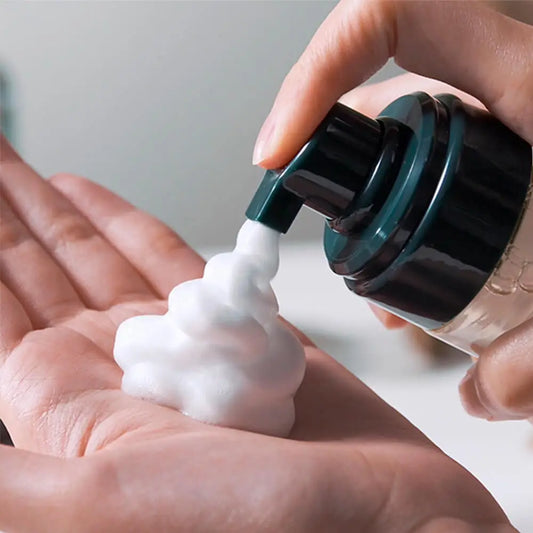
The Calming Low pH Foaming Cleanser has a pump: the foam comes out dense and ready to use, with a mildly acidic pH close to healthy skin’s. Inside: centella (with madecassoside, one of its soothing compounds), tea tree and honeysuckle. White willow bark is there to keep pores clear: it takes the place of harsher exfoliants, gently dissolving excess oil, while fruit acids (AHAs) lift away dead skin cells. Hyaluronic acid stops the skin feeling tight afterwards. The foam removes fine city dust, sunscreen and excess oil.
Who it’s for: sensitive and breakout-prone skin, though Pyunkang Yul also calls it simply a gentle daily cleanser — for anyone whose face feels tight after washing. How to use: pump the foam into wet hands, massage it gently into damp skin in circular motions and rinse with lukewarm water. Cleansers from other brands are in our cleansing collection; for breakout-prone skin there’s the breakouts collection; and for centella products, the centella collection.
Toning: the Essence Toner — why it’s thick and who it’s for
The Essence Toner is what most often brings people to Pyunkang Yul: the brand’s bestseller, in 100 ml and 200 ml bottles. A toner is the first step after cleansing and is usually watery; an essence is thicker and more concentrated. This one is closer to an essence in texture — which is exactly what the name says. Its base is astragalus root extract, sourced from Jecheon — the main astragalus-growing area in Korea, according to the brand.
The brand’s reasoning: when the barrier thins, the skin weakens, and what it needs isn’t surface hydration but a stronger barrier. A watery toner can’t hold on to moisture that’s already slipping away — so Pyunkang Yul’s answer is to start strengthening the barrier at the very first step. The brand also links a thinned barrier to enlarged pores and to recurring problems such as irritation, dryness and sensitivity.
Who it’s for: sensitive, dry or tight skin; redness, enlarged pores and dullness. How to use: straight after cleansing — with your hands or a cotton pad, patting it in gently; when your skin needs more moisture, the brand suggests two or three layers, letting each absorb, or soaking cotton pads in the toner and leaving them on as a mini-mask. Then serum and cream as usual. Toners and essences from other brands are in our toners and essences collection, and there’s a sensitive skin collection too.
Eye area: Black Tea Time Reverse Eye Cream, built on kombucha
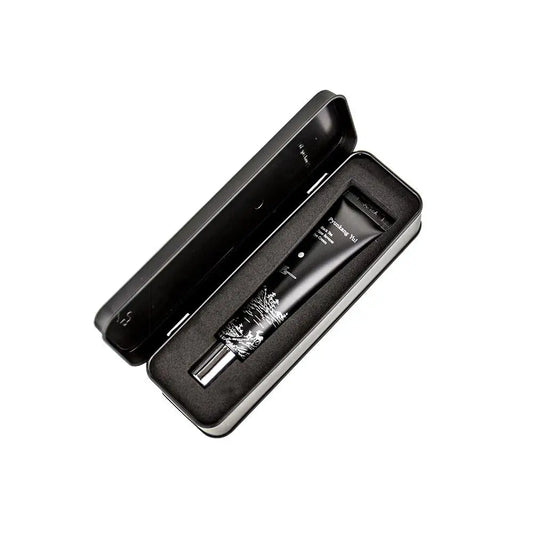
Kombucha here isn’t a drink: black tea is fermented for weeks, sometimes more than a month, and the result is an antioxidant-rich ingredient the Black Tea line is built around. In the eye cream it’s joined by two peptides (what they are is in our guide to peptides) and by paper mulberry root extract — the same plant hanji is made from — for an even tone. Niacinamide and adenosine are what the brand calls a dual-action pair: tone and wrinkles. Hydration comes from hyaluronic acid and a ceramide (there’s a separate guide to ceramides), plus shea and macadamia oils — yet the texture isn’t sticky. The cream comes in a small tin with a mother-of-pearl finish.
Who it’s for: anyone who can already see fine lines around the eyes, whose skin there is dry and tired-looking, or whose tone around the eyes has darkened and gone uneven. How to use: as the last step of your routine, after face cream — a little on the skin around the eyes, patted in lightly with your fingertips until it’s absorbed. The brand says there’s no need to stop at the eye area: the same cream can go on smile lines, the forehead and the neck. Eye creams from other brands are in our eye cream collection.